Dubai's luxury villa remodelling segment is expanding at a CAGR of 7.7%, and the trajectory is clear. Those who invest in villa renovation in Dubai are not merely upgrading a home; they are repositioning an asset in one of the world's most competitive luxury markets.
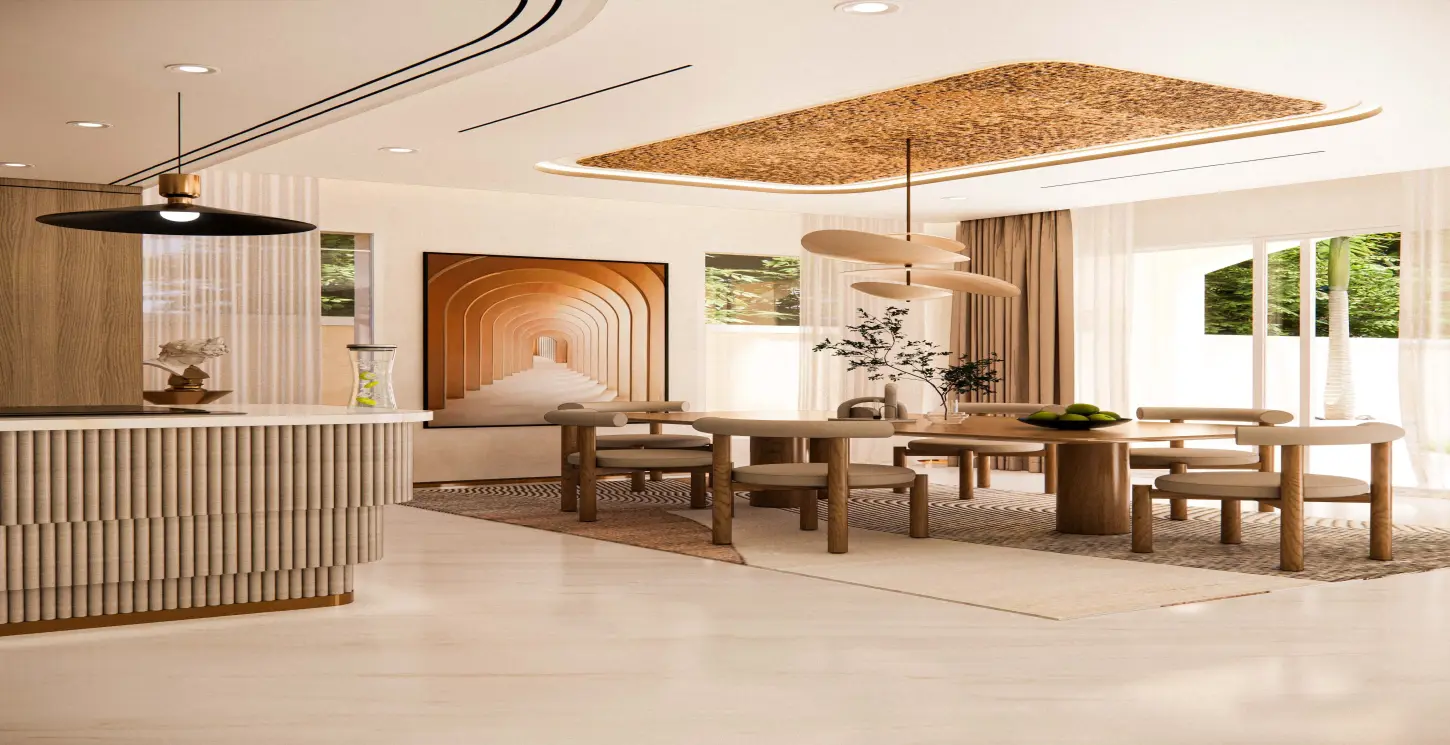
Dubai's villa market does not reward the ordinary. With property prices rising approximately 60% between 2022 and Q1 2025, according to Fitch Ratings, the city's most astute owners have arrived at the same conclusion: transformation is the most powerful lever available to them. Not renovation in the conventional sense, but a deliberate, design-led reimagining of space, materiality, and lifestyle.
Dubai's luxury villa remodelling segment is expanding at a CAGR of 7.7%, and the trajectory is clear. Those who invest in villa renovation in Dubai are not merely upgrading a home; they are repositioning an asset in one of the world's most competitive luxury markets.
In Dubai's premium communities, a high-end villa transformation is defined by its coherence, every spatial, material, and technical decision working together to elevate how the home is experienced and valued.
Many villas built across communities like The Meadows, The Springs, and Jumeirah Park carry floor plans that are over a decade old. Open-plan layouts, connecting living, dining, and kitchen zones with improved volume and natural light, are now the defining features of high-end home renovation.
In Dubai's luxury segment, material choices communicate property position. Marble surfaces, wide-format porcelain, engineered hardwood, bespoke joinery, and brushed metalwork create the sensory continuity that separates a curated interior from a renovated one.
A villa's mechanical, electrical, and plumbing systems are its foundation. Outdated infrastructure beneath beautiful surfaces creates long-term risk. Smart home integration, centralised lighting, climate automation, and security systems have shifted from a luxury feature to a buyer expectation in premium communities. Dubai's government-backed smart city agenda accelerates this adoption further.
Dubai's climate, combined with generous villa plot sizes, creates enormous potential for outdoor transformation. Architecturally designed pools, covered pergolas, and integrated landscaping extend a home's liveable footprint significantly. Outdoor additions can significantly increase the total property value when executed with design integrity.
Executing a high-end villa transformation in Dubai requires more than design intent; it demands technical precision, regulatory knowledge, and an understanding of what the market actually rewards. These are the key elements of villa renovation in Dubai that distinguish a premium project from a well-intentioned one.
Custom joinery is one of the clearest dividing lines between standard and luxury renovation. Built-in wardrobes, kitchen cabinetry, TV units, library shelving, and concealed storage give complete control over dimension, material, and finish. In Dubai's premium villa market, off-the-shelf solutions are immediately identifiable and priced accordingly. Bespoke millwork, designed specifically for the space, is what elevates a home into a considered composition.
Lighting is architecture. In high-end villa projects, it is never an afterthought; it is a deliberate layer of the design. Layered ambient, task, and accent lighting; concealed LED systems; feature pendants; and automated scene control all shape how a space is perceived at different times of day. A villa with intelligent lighting design feels generous, warm, and resolved. One without it rarely achieves the same effect, regardless of the materials used.
Dubai's regulatory landscape is evolving, and so are buyer expectations. Dubai currently ranks third in global cities with more than 400 projects with LEED certification. High-end villa transformations now regularly incorporate energy-efficient HVAC systems, solar panel integration, high-performance glazing, water conservation systems, and non-toxic interior finishes. These are not merely environmental choices; they reduce operating costs, satisfy Dubai's Al Sa'fat green building standards, and strengthen a villa's long-term market position.
In Dubai, structural modifications require Dubai Municipality approval. Community-specific NOCs from developers such as Emaar, Nakheel, or Damac are frequently required before any work commences. On Palm Jumeirah, Nakheel and Trakhees approvals involve more complex engineering submissions, with permit fees. Failing to navigate this correctly risks fines and project delays that far exceed the cost of proper planning.
Here are modern villa renovation ideas in Dubai and what each transformation type addresses & the role it plays in Dubai's competitive property market.
Villa renovation in Dubai is increasingly treated as a primary wealth creation strategy, not a secondary lifestyle consideration. The data from Dubai's real estate market makes the financial case clear.
A well-executed villa transformation can increase its resale value. At the premium end, villa owners in select communities have reported returns of up to 100% and achieved upwards of USD 10 million in profit post-sale, as reported by Arabian Business. A documented Palm Jumeirah case saw a villa acquired at AED 30 million repositioned at AED 65 million following AED 11 million in strategic redevelopment. a 50% value increase.
Areas including Jumeirah Park, The Lakes, and Jumeirah Islands have seen year-on-year sale price growth exceeding 20%, and renovated properties within those communities command measurable premiums over non-transformed equivalents, according to Cushman & Wakefield Core data.
Renovated villas command 18–22% higher rental income compared to non-transformed properties in the same communities, per Bayut data. In practice, this is the difference between a villa that attracts premium tenants quickly and one that sits on the market at a discount. A transformed villa is a leasing asset; an outdated one is a liability in a market where tenant expectations are rising in step with property values.
The gap between a compelling vision and a flawlessly delivered space is the process. At Haifa Renov8, our methodology has been refined across 1,350+ completed projects. Here’s our process in detail:
Our team meets with you at our office or your villa to understand your spatial ambitions and long-term objectives. After the initial meeting, we deliver a customised scope of work. Design development follows: property measurement, material research, and the creation of 2D and 3D models. You see the transformed space before we build it, with every revision incorporated until the design is exactly right.
Once the design is approved, we map investment allocation across every scope element. Material procurement for high-end villa transformation in Dubai requires access to premium suppliers and reliable lead-time management. Our 150+ in-house experts handle these variables so your project is never delayed by avoidable friction.
Construction follows a master schedule agreed with you in advance. We manage all authority approvals, including Dubai Municipality permits for structural modifications, and community-level approvals from developers such as Emaar, Nakheel, or Damac. Full-scale villa transformations typically require three to six months, depending on scope.
Our relationship extends beyond handover. We remain available for maintenance, future upgrades, and refinements as your lifestyle evolves because the most important measure of a transformation is how it performs over time, not just on completion day.
At Haifa Renov8, every service is designed to work as part of a larger whole. Whether you are transforming a single space or reimagining an entire villa, our integrated offering means one team, one vision, and one standard of excellence, from the first design consultation to the final handover.
Haifa Renov8 is part of the Haifa Construction Group, serving the UAE since 1991 with 22 years of design-build expertise. We have 1,350+ completed projects and 150+ in-house specialists across Dubai's most prestigious communities.
We deliver villa transformations across Palm Jumeirah, Emirates Hills, Dubai Hills, Arabian Ranches, Jumeirah Golf Estates, Jumeirah Islands, Tilal Al Ghaf, Meydan, The Meadows, The Springs, DAMAC Hills, Jumeirah Park, Al Khawaneej, Jumeirah Village Circle, Jumeirah Village Triangle, Green Community Dubai, Nad Al Sheba, and beyond.
Use our cost calculators to begin shaping your project scope, then connect with our team to take it further. Consult our team and discover what 22 years of transformation excellence can do for your villa.
1. Do I need permits for villa renovation in Dubai?
Yes. Structural changes require Dubai Municipality approval, and community-specific NOCs from developers like Emaar, Nakheel, or Damac are often required.
2. Which renovation increases property value the most in Dubai?
Kitchen and bathroom transformations consistently deliver the highest ROI. Outdoor additions, including pools, can also add significant value to the total property value.
3. Is villa renovation worth it before resale in Dubai?
Yes. Fully renovated, turnkey villas command significantly stronger resale prices. HNWIs purchasing in Dubai prefer move-in-ready and fully finished properties.
4. What communities does Haifa Renov8 serve in Dubai?
Haifa Renov8 serves all major villa communities, including Palm Jumeirah, Emirates Hills, Dubai Hills, Arabian Ranches, Jumeirah Golf Estates, Tilal Al Ghaf, and more.
5. What is the renovation cost for luxury villas in Dubai?
The cost of high-end luxury villa renovations in Dubai depends on factors such as the size of the villa, the scope of work, and the finish level selected.






 Dubai Hills